


Acepromazine
Original price was: $40.00.$35.00Current price is: $35.00.
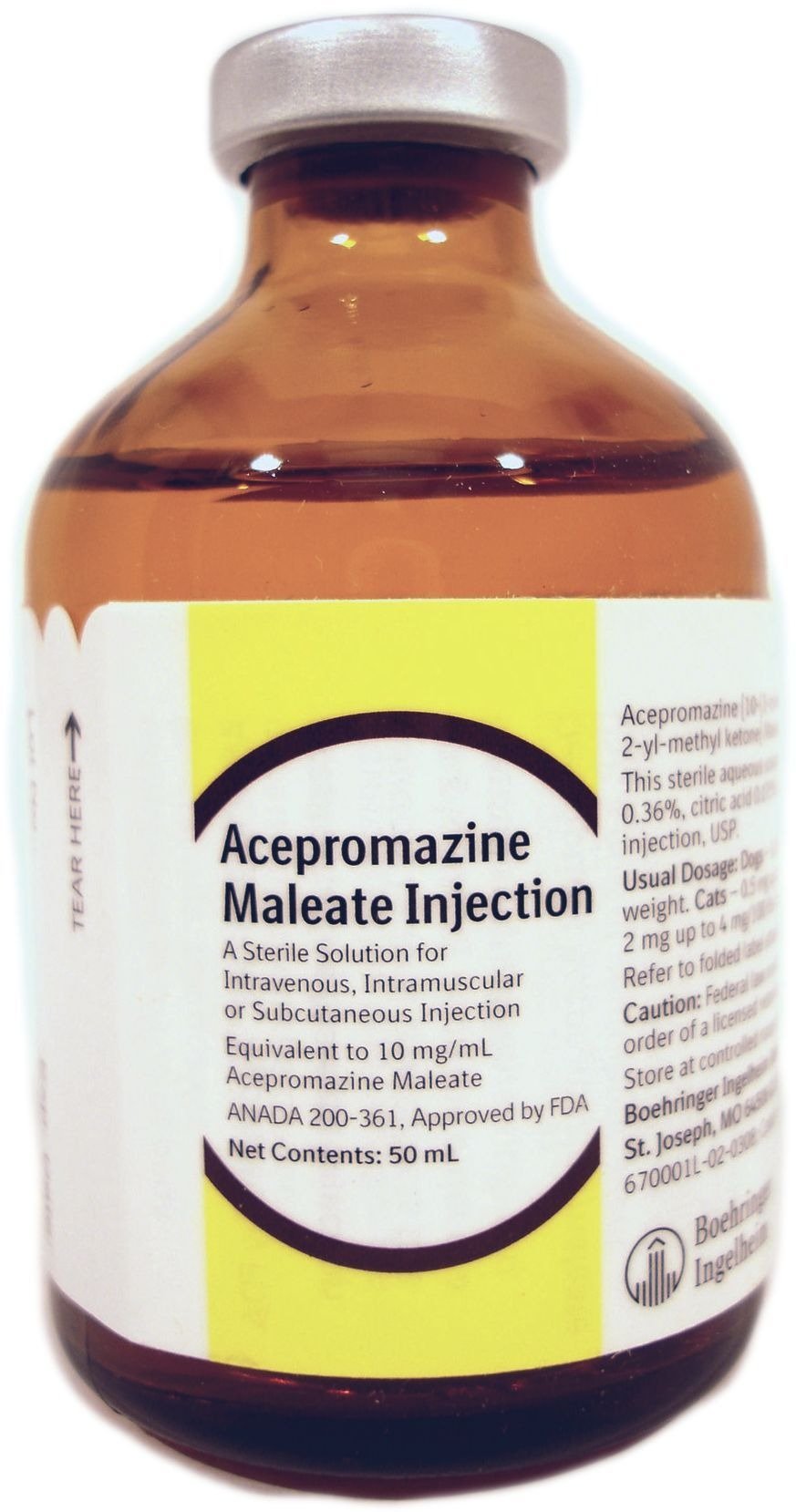
Acepromazine maleate (brand names: PromAce®, Aceprotabs, ACP) is a phenothiazine derivative used in veterinary medicine for decades. It is prescribed as a sedative, tranquilizer, and pre‑anesthetic agent.
Acepromazine – Veterinary Sedative & Tranquilizer
Acepromazine maleate (brand names: PromAce®, Aceprotabs, ACP) is a phenothiazine derivative used in veterinary medicine for decades. It is prescribed as a sedative, tranquilizer, and pre‑anesthetic agent. In dogs and cats, it helps reduce anxiety, motion sickness, and reactivity to stressful events. In horses, it is sometimes used for chemical restraint and sedation.
Key Benefits
- Sedation & Tranquilization: Calms anxious or restless animals.
- Pre‑Anesthetic Use: Reduces the amount of general anesthesia required during surgery.
- Motion Sickness Relief: Helps prevent nausea and vomiting during travel.
- Behavioral Control: Provides chemical restraint for veterinary procedures.
How It Works
- Acepromazine acts on the central nervous system, depressing dopamine receptors.
- It produces sedation without analgesia (no pain relief).
- It lowers blood pressure by causing vasodilation, which must be monitored in sensitive animals.
Recommended Usage
- Forms: Available as tablets (10 mg, 25 mg) and injectable solutions.
- Administration: Oral tablets or injection (intramuscular, subcutaneous, or intravenous).
- Timing: Typically given 45–60 minutes before a procedure or stressful event.
- Species: Dogs, cats, horses; sometimes used off‑label in small exotics.
- Precautions:
- Not recommended for animals with seizure disorders, liver disease, or low blood pressure.
- Should only be used under veterinary supervision.
- Dosage varies by species, weight, and health condition.
Risks & Side Effects
- Common: Sedation, lethargy, lowered blood pressure.
- Serious (rare): Collapse, seizures, or prolonged sedation.
- Note: It does not relieve pain, so analgesics may be required alongside.
Description
Acepromazine Maleate Injection is used for sedation, tranquilization and as a pre-anesthetic agent in horses, dogs and cats. Each ml contains 10 mg Acepromazine Maleate. Can be used as an aid in controlling animals during examination, treatment and minor surgical procedures. Maleate has a depressant effect on the central nervous system and therefore causes sedation, muscular relaxation and a reduction in spontaneous activity. It acts rapidly, exerting a prompt and pronounced calming effect. It is an effective pre-anesthetic agent and lowers the dosage requirement of general anesthetics.
Acepromazine Maleate Injection may be given intravenously, intramuscularly or subcutaneously. The general dosage of Maleate Injection for horses is 2-4 mg per 100 lbs body weight; dogs 0.25-0.5 mg per lb body weight; for cats 0.5-1.0 mg per lb body weight.
Not for use in animals hypersensitive (allergic) to it or other phenothiazines. Use with caution in debilitated or geriatric animals and those with liver or heart disease. Do not use in pregnant or lactating animals (female animals nursing their young) unless benefits outweigh the risks. Do not use in animals with hypovolemia (low blood volume), anemia, or shock. Do not use in animals with tetanus or strychnine toxicity. May cause seizures. Do not use with animals known to have seizures or are having medical procedures known to cause seizures (e.g., myelograms). When used to aid in restraint, the sedative effect can be overridden and the animal may bite or jump unexpectedly. Promace is an inappropriate medication for the treatment of aggression since it can make aggressive animals less predictable, and can interfere with training. Causes low blood pressure and inability to maintain proper body temperature. ACEPROMAZINE ACEPROMAZINE ACEPROMAZINE ACEPROMAZINE
Does not provide any pain relief. Giant breeds, greyhounds, and boxers may be more sensitive to its effects; terriers may be less sensitive. Effects may last 6-8 hours, and results may not be consistent when given orally. Consult with your veterinarian regarding the physical examinations and laboratory testing necessary prior to and during treatment with promace.
Drug, Food, and Test Interactions:
Consult your veterinarian before using promace with vitamins, supplements, atropine, central nervous system (CNS) depressant drugs (such as barbiturates, narcotics, and antidepressants), organophosphate dewormer or insecticide, kaopectate, Pepto-Bismal, other antidiarrheal mixures, antacids, propranolol, and epinephrine. May have an adverse heart reaction if used with quinidine. Phenytoin levels and procaine activity may be increased if used with promace.





Reviews
There are no reviews yet.