

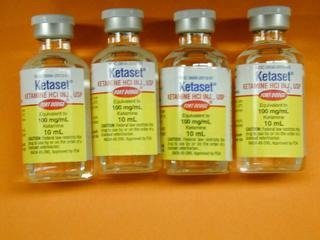
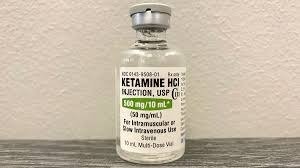
ketaset injection
Original price was: $120.00.$110.00Current price is: $110.00.
ketamin injection As an anaesthetic agent for diagnostic and surgical procedures. When used by intravenous or intramuscular injection
ketaset injection As an anaesthetic agent for diagnostic and surgical procedures. When used by intravenous or intramuscular injection, is best suited for short procedures. With additional doses, or by intravenous infusion, Ketamine can be used for longer procedures. If skeletal muscle relaxation is desired, a muscle relaxant should be used and respiration should be supported.
For the induction of anaesthesia prior to the administration of other general anaesthetic agents. To supplement other anaesthetic agents.
Specific areas of application or types of procedures :ketamin injection
When the intramuscular route of administration is preferred.
Debridement, painful dressings, and skin grafting in burned patients, as well as other superficial surgical procedures.
Neurodiagnostic procedures such as pneumoencephalograms, ventriculograms, myelograms, and lumbar punctures.
Diagnostic and operative procedures of the eye, ear, nose, and mouth, including dental extractions.
Note: Eye movements may persist during ophthalmological procedures.ketamin injection
Anaesthesia in poor-risk patients with depression of vital functions or where depression of vital functions must be avoided, if at all possible.
Orthopaedic procedures such as closed reductions, manipulations, femoral pinning, amputations, and biopsies.
Sigmoidoscopy and minor surgery of the anus and rectum, circumcision and pilonidal sinus.
Cardiac catheterization procedures.
Caesarean section; as an induction agent in the absence of elevated blood pressure.
Anaesthesia in the asthmatic patient, either to minimise the risks of an attack of bronchospasm developing, or in the presence of bronchospasm where anaesthesia cannot be delayed.
For intravenous infusion, intravenous injection or intramuscular injection.
NOTE: All doses are given in terms of ketamine base
Adults, elderly (over 65 years) and children:
For surgery in elderly patients ketamine has been shown to be suitable either alone or supplemented with other anaesthetic agents.
Preoperative preparations
Ketamine has been safely used alone when the stomach was not empty. However, since the need for supplemental agents and muscle relaxants cannot be predicted, when preparing for elective surgery it is advisable that nothing be given by mouth for at least six hours prior to anaesthesia.
Premedication with an anticholinergic agent (e.g. atropine, hyoscine or glycopyrolate) or another drying agent should be given at an appropriate interval prior to induction to reduce ketamine- induced hypersalivation.
Midazolam, diazepam, lorazepam, or flunitrazepam used as a premedicant or as an adjunct to ketamine, have been effective in reducing the incidence of emergence reactions.
Onset and duration
As with other general anaesthetic agents, the individual response to Ketamine is somewhat varied depending on the dose, route of administration, age of patient, and concomitant use of other agents, so that dosage recommendation cannot be absolutely fixed. The dose should be titrated against the patient’s requirements.
Because of rapid induction following intravenous injection, the patient should be in a supported position during administration. An intravenous dose of 2 mg/kg of bodyweight usually produces surgical anaesthesia within 30 seconds after injection and the anaesthetic effect usually lasts 5 to10 minutes. An intramuscular dose of 10 mg/kg of bodyweight usually produces surgical anaesthesia within 3 to 4 minutes following injection and the anaesthetic effect usually lasts 12 to 25 minutes. Return to consciousness is gradual.
A. Ketamine as the sole anaesthetic agent
Intravenous Infusion
The use of Ketamine by continuous infusion enables the dose to be titrated more closely, thereby reducing the amount of drug administered compared with intermittent administration. This results in a shorter recovery time and better stability of vital signs.
A solution containing 1 mg/ml of ketamine in dextrose 5% or sodium chloride 0.9% is suitable for administration by infusion.
General Anaesthesia Induction
An infusion corresponding to 0.5 – 2 mg/kg as total induction dose.
Maintenance of anaesthesia
Anaesthesia may be maintained using a microdrip infusion of 10 – 45 microgram/kg/min (approximately 1 – 3 mg/min).
The rate of infusion will depend on the patient’s reaction and response to anaesthesia. The dosage required may be reduced when a long acting neuromuscular blocking agent is used.
Intermittent Injection
Induction
Intravenous Route
The initial dose of Ketamine administered intravenously may range from 1 mg/kg to 4.5 mg/kg (in terms of ketamine base). The average amount required to produce 5 to 10 minutes of surgical anaesthesia has been 2.0 mg/kg. It is recommended that intravenous administration be accomplished slowly (over a period of 60 seconds). More rapid administration may result in respiratory depression and enhanced pressor response.
Dosage in Obstetrics
In obstetrics, for vaginal delivery or in caesarean section, intravenous doses ranging from 0.2 to 1.0 mg/kg are recommended (see section 4.6 Fertility, pregnancy and lactation).
Intramuscular Route
The initial dose of Ketamine administered intramuscularly may range from 6.5 mg/kg to 13 mg/kg (in terms of ketamine base). A low initial intramuscular dose of 4 mg/kg has been used in diagnostic manoeuvres and procedures not involving intensely painful stimuli. A dose of 10 mg/kg will usually produce 12 to 25 minutes of surgical anaesthesia.
Dosage in Hepatic Insufficiency:
Dose reductions should be considered in patients with cirrhosis or other types of liver impairment. (see section 4.4 Special Warnings and Special Precautions for Use)
Dosage in Obstetrics
Data are lacking for intramuscular injection and maintenance infusion of ketamine in the parturient population, and recommendations cannot be made. Available data are presented in Section 5.2.
Maintenance of general anaesthesia
Lightening of anaesthesia may be indicated by nystagmus, movements in response to stimulation, and vocalization. Anaesthesia is maintained by the administration of additional doses of Ketamine by either the intravenous or intramuscular route.
Each additional dose is from ½ to the full induction dose recommended above for the route selected for maintenance, regardless of the route used for induction.
The larger the total amount of Ketamine administered, the longer will be the time to complete recovery.
Purposeless and tonic-clonic movements of extremities may occur during the course of anaesthesia. These movements do not imply a light plane and are not indicative of the need for additional doses of the anaesthetic.
B. Ketamine as induction agent prior to the use of other general anaesthetics
Induction is accomplished by a full intravenous or intramuscular dose of Ketamine as defined above. If Ketamine has been administered intravenously and the principal anaesthetic is slow- acting, a second dose of Ketamine may be required 5 to 8 minutes following the initial dose. If Ketamine has been administered intramuscularly and the principal anaesthetic is rapid-acting, administration of the principal anaesthetic may be delayed up to 15 minutes following the injection of Ketamine.



Reviews
There are no reviews yet.